
Five Years In: Why This Milestone Matters More Than People Think
Every small business owner hears the statistic at some point, usually from someone who isn’t running one: most small businesses don’t make it past five years. It gets said so often that it’s easy to stop hearing it as a fact and start hearing it as background noise. But when you’re the one who actually crosses that line, it stops being a statistic. It becomes proof.
Why is it so hard to take the first step when you actually want to?
Year one, you’re testing whether the idea works at all. Year two, you’re testing whether it works without you white-knuckling every decision. By year three or four, you’re finding out whether your systems hold up when you’re not in the room, whether your team can operate without you translating every instruction, whether your clients came back because of a promotion or because the work actually delivered.
Five years means you’ve been tested by real conditions, not just launch-week enthusiasm: slow seasons, a bad hire, a good hire who left, a supplier who changed terms, a year the economy did something nobody predicted. If the business is still standing, that’s not luck holding it up. That’s a business that works.
It’s proof for clients, not just for you.
For a business built on trust, a five-year mark does something a single glowing review can’t. It tells a new or hesitant client: this isn’t a pop-up. This isn’t someone testing a concept on my time and money. This is a place that has been refined by five years of feedback, five years of “let’s fix that,” five years of getting better at the actual job. That’s a different kind of confidence than a launch promo ever generates, and it’s worth saying out loud rather than assuming people notice on their own.
It’s proof for the people who bet on you.
A team or team member that’s stuck around for a few years isn’t just staff, they’re the reason a lot of it worked. Vendors who extended you flexibility in a slow month, a landlord who worked with you, the first clients who showed up before there was a track record to point to, they all put something on the line. Marking the milestone is a way of naming that, not just for optics, but because it’s true: this wasn’t a solo act.
And it’s worth marking publicly, not just privately.
We’re not waving this year off as “no big deal.” We’re excited about celebrating this milestone and it’s exactly the kind of credibility marker that deserves a LinkedIn post, a client email, a small in-house moment, whatever fits how the business actually communicates. Not as a victory lap, but as an honest signal: this works, here’s the evidence, and here’s what’s next.
It’s a legitimate moment to look at the numbers, not just the feelings.
Five years gives you something one or two years can’t: a real trend line. Which services actually carried the business versus which ones sounded good on paper. Which marketing efforts paid for themselves versus which ones just felt productive. Which systems scaled and which ones quietly became bottlenecks. An anniversary is as good a checkpoint as any to sit down and actually look at that, honestly, without the sentimentality doing the analysis for you.
Speaking of what’s next: a special welcome to Shanna Fratini.
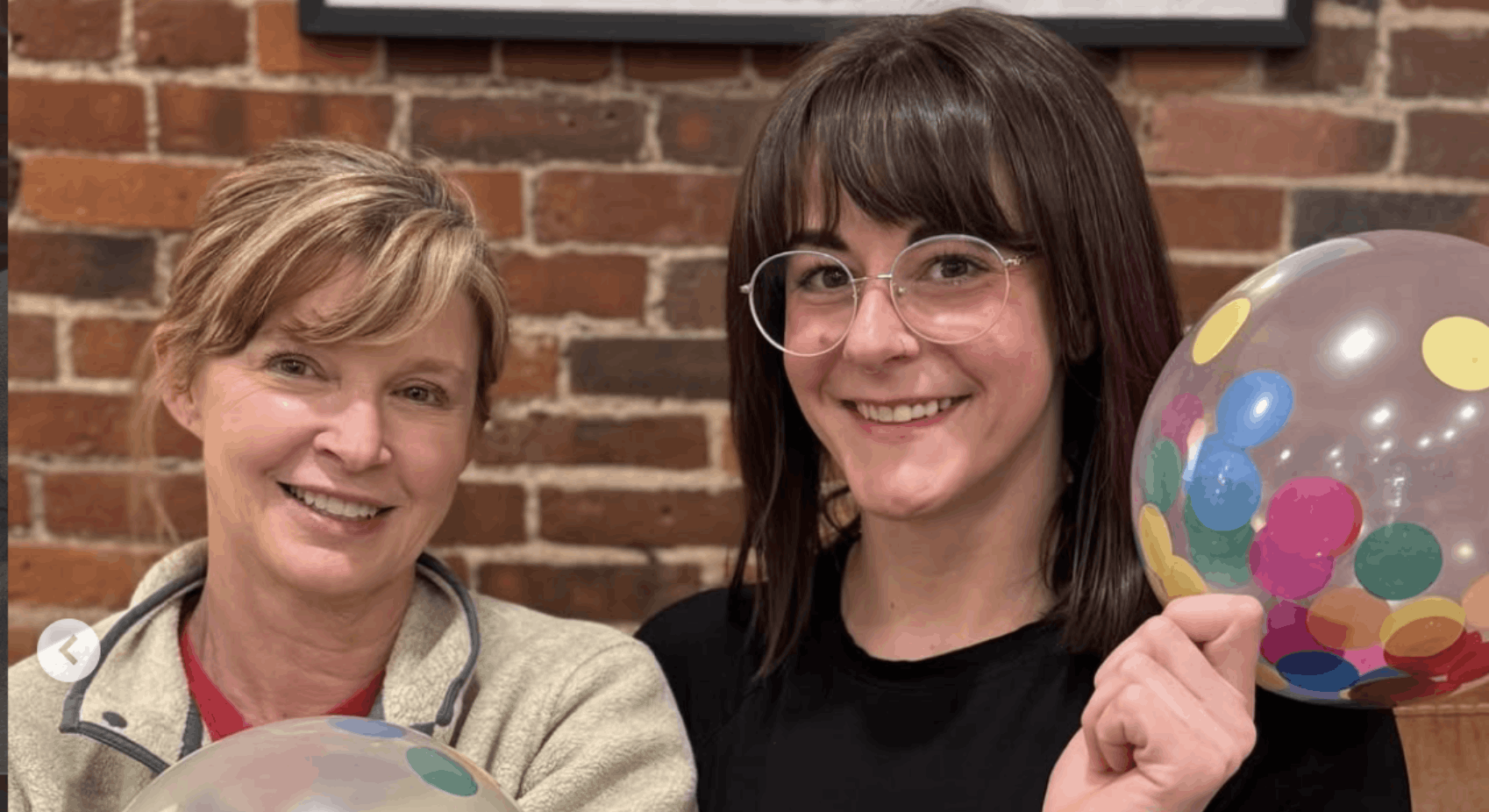
This year, Rytualist gained something no five-year plan could have fully mapped out: a partner. Shanna Fratini joined us earlier this year as a 50/50 partner, and she’s already made a huge impact. Many of you already know Shanna as an amazing aesthetician who has been with Rytualist for 3 years but she made the step to ownership this year, bringing fresh energy, sharp attention to detail, and a shared commitment to doing this work the right way. If you’ve visited us recently, you’ve likely already felt the difference. If the first five years were about proving Rytualist works, the next chapter is about what it can become, and there’s no one we’d rather build that with. With Shanna on board, the future of Rytualist has never looked brighter.
Five years isn’t the finish line. It’s the point where a business stops needing to explain itself and starts being able to point at its own track record instead.